
Rowe & Walton PC
Rowe & Walton PC
The Quick Answer (TL;DR)
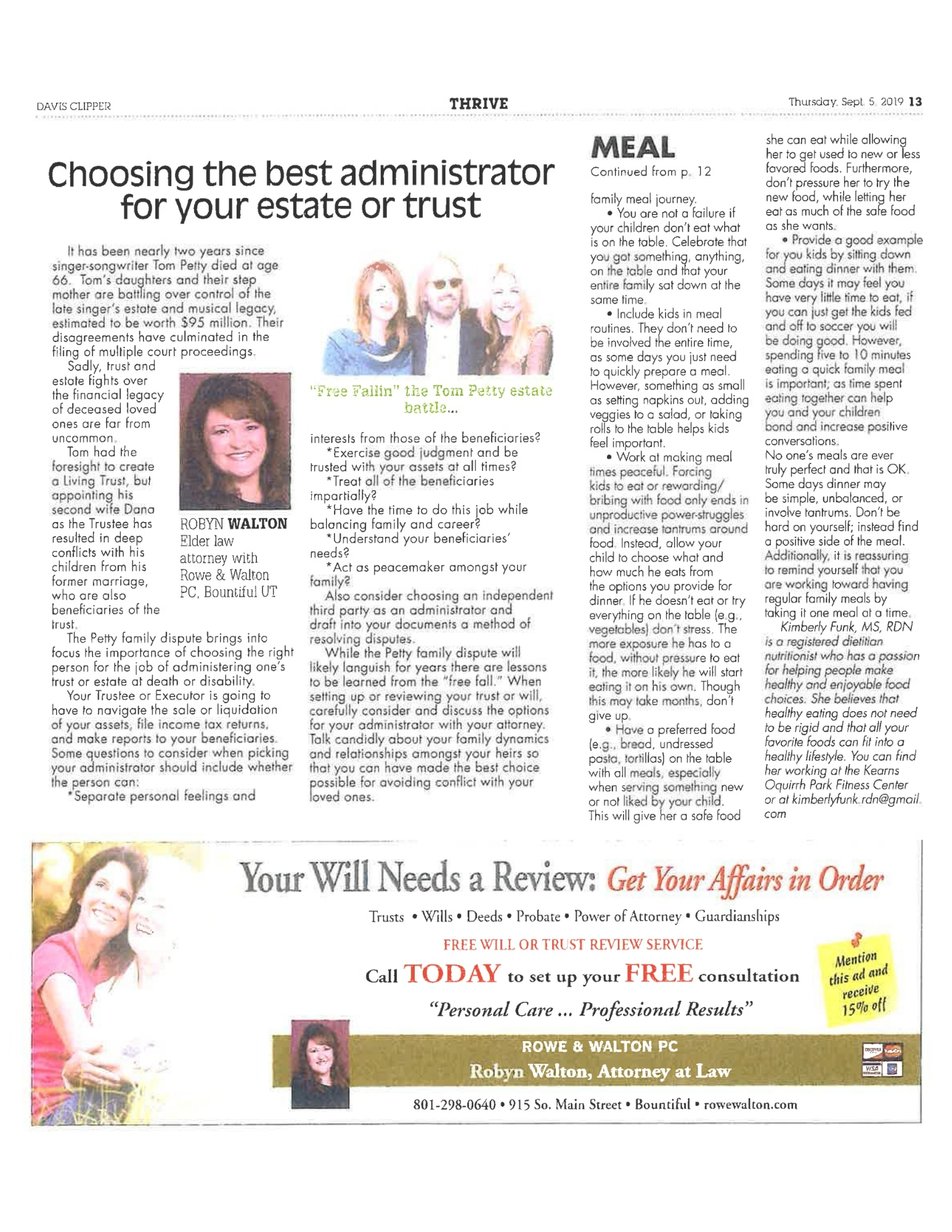
When rock legend Tom Petty passed away at 66, he left behind a massive musical legacy and an estate estimated at $95 million. He also left behind a textbook example of why choosing the right estate administrator is the most critical decision in your estate plan.
Petty had the foresight to create a Living Trust—a highly recommended tool for avoiding probate and keeping estate matters private. However, he appointed his second wife, Dana, as the sole Trustee. Almost immediately following his death, deep, bitter conflicts erupted between Dana and Petty’s two daughters from a previous marriage (who were also named beneficiaries). The family dispute ultimately spiraled into multiple public court proceedings, draining the estate’s resources and destroying family relationships.
The Petty family’s “free fall“ into legal chaos highlights a crucial lesson for families right here in Utah: having a trust isn’t enough. You have to put the right person in the driver’s seat.
One of the most common mistakes people make is treating the appointment of a Trustee or Executor like a gold star of affection. Parents often name their oldest child simply because it feels like the “fair“ or “traditional“ thing to do.
However, administering a trust or estate at death or disability is an incredibly demanding job. The person you name will be legally responsible for navigating the sale or liquidation of your assets, filing complex income and estate tax returns, and making detailed financial reports to the beneficiaries.
If they mishandle these duties, they can be held personally liable. Before you name someone to this role, you need to ask some hard questions.
When sitting down to choose your administrator, objectively evaluate your candidates against this checklist. Can the person you are considering truly do the following?
The Tom Petty estate perfectly illustrates the unique dangers blended families face. If you have children from a previous relationship and are currently remarried, naming your current spouse as the sole Trustee over your children’s inheritance is often a recipe for disaster.
If you look at your family dynamic and realize that none of your family members can answer “yes“ to the checklist above, don’t force it. You can choose an independent, third-party professional (such as a bank, trust company, or specialized fiduciary) to act as your administrator.
Furthermore, a well-drafted trust should always include specific, legally binding methods for resolving disputes outside of the courtroom.
While the Petty family dispute will likely languish for years, there are valuable lessons to be learned from their tragedy. When setting up or reviewing your trust or will, you must carefully consider and discuss the options for your administrator with an experienced attorney.
At Rowe & Walton PC, we understand that every family dynamic is unique. We will talk candidly with you about your specific family situation and help you structure your documents so you can have absolute confidence that you have made the best choice possible to avoid conflict among your loved ones.
Don’t leave a legacy of stress and litigation. Get your affairs in order today.